

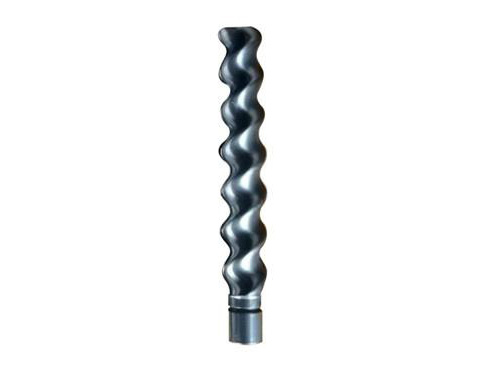
Screw pump efficiency auditing for factories is a structured process for measuring, analyzing, and optimizing
the performance of industrial screw pumps. This long-form guide explains the core concepts, standard methods,
and practical tools used to audit screw pump efficiency in manufacturing plants and process industries.
In modern factories, screw pumps are critical components in systems that handle liquids, viscous fluids,
slurries, and lubricants. They are widely used in chemicals, food and beverage, pharmaceuticals, oil and gas,
power generation, and general manufacturing. As energy prices rise and sustainability regulations tighten,
screw pump efficiency auditing for factories has become a high-impact strategy to reduce operating costs and
improve reliability.
An efficiency audit focuses on how much useful hydraulic work a screw pump delivers compared with the
electrical or mechanical power it consumes. By systematically auditing screw pumps across a factory, operators
can identify oversized pumps, throttled systems, worn rotors, internal leakage, and poor control strategies that
waste energy and increase lifecycle cost.
Screw pump efficiency auditing is a comprehensive evaluation of the performance, energy consumption, and
mechanical condition of screw pumps installed in a factory. It combines field measurements, data analysis, and
comparison with design specifications or industry benchmarks in order to:
Screw pump efficiency auditing for factories is not a one-time activity; it is a continuous improvement practice
integrated into energy management systems, reliability programs, and process optimization initiatives.
Many screw pump configurations are used in industrial environments. From the perspective of screw pump efficiency
auditing for factories, the most relevant categories include:
Single-screw pumps use one helical rotor inside an elastomeric or metallic stator. They are used for:
Efficiency auditing for single-screw pumps focuses on volumetric losses due to stator wear, rotor damage,
and dry running events.
Twin-screw pumps use two intermeshing screws driven either directly or through timing gears. They can handle:
Twin-screw pump efficiency audits pay close attention to clearances between screws, shaft alignment, and speed control.
Three-screw pumps feature one driving screw and two idler screws. They are widely used for:
For three-screw pumps, screw pump efficiency auditing in factories concentrates on internal leakage around
the screw flanks, wear in housing bores, and oil viscosity influence.
While less common inside typical manufacturing facilities, vertical screw pumps and Archimedean screw pumps
are used for water lifting, cooling water systems, and large flow, low head applications. Efficiency auditing for
these large screw pumps mainly examines hydraulic losses and mechanical alignment.
Screw pump efficiency auditing for factories delivers multiple strategic and operational benefits:
Screw pump efficiency auditing in factories relies on a core set of technical indicators. These key performance
indicators (KPIs) allow consistent benchmarking and comparison across pumps and operating conditions.
Volumetric efficiency (ηv) expresses how effectively the screw pump delivers the theoretical
displacement volume. It accounts for internal leakage and slip.
Formula:
ηv = (Qactual / Qtheoretical) × 100%
Where:
Hydraulic efficiency (ηh) describes how effectively the pump converts mechanical input power
at the shaft into fluid power at the discharge.
Formula:
ηh = (Phydraulic / Pshaft) × 100%
Where:
In practice, Phydraulic in kilowatts can be calculated using:
Phydraulic (kW) = (Δp (bar) × Q (m3/h)) / 367
Mechanical efficiency (ηm) is the ratio of shaft power to motor output power, accounting for
mechanical and transmission losses (bearings, couplings, gearboxes).
Formula:
ηm = (Pshaft / Pmotor) × 100%
Overall pump efficiency (ηoverall) combines volumetric, hydraulic, and mechanical efficiencies.
Formula:
ηoverall = ηv × ηh × ηm
In many factory audits, overall screw pump efficiency is expressed directly as:
ηoverall = (Phydraulic / Pmotor) × 100%
Specific energy consumption is a critical KPI for energy-focused screw pump efficiency auditing in factories.
Formula:
SEC = Energy input (kWh) / Volume pumped (m3)
Lower SEC indicates more efficient pumping performance for the same duty.
Screw pump efficiency is strongly influenced by operating conditions. Audits therefore examine:
These metrics help determine whether a screw pump is consistently operating near its optimal efficiency range.
When planning screw pump efficiency auditing in factories, auditors review technical data sheets and nameplates
for each pump. Key parameters include displacement, speed limits, pressure ratings, viscosity ranges, and
expected efficiency levels under standard conditions.
| Parameter | Single-Screw Pump | Twin-Screw Pump | Three-Screw Pump | Relevance for Efficiency Auditing |
|---|---|---|---|---|
| Flow range (m3/h) | 0.1 – 400 | 1 – 1,000+ | 0.5 – 500 | Determines metering devices, flow meter sizing, and expected operating point. |
| Differential pressure (bar) | Up to 24+ depending on design | Up to 40+ | Up to 80+ (typical for lube systems) | Higher pressure leads to larger slip and energy losses; key variable in SEC calculations. |
| Viscosity range (cSt) | 1 – 1,000,000 | 1 – 200,000 | 3 – 3,000 | Viscosity strongly influences volumetric and hydraulic efficiencies. |
| Speed range (rpm) | 50 – 1,500 | 100 – 3,600 | 500 – 3,600 | Speed affects slip, mechanical wear, and BEP; audited via tachometers or VFD data. |
| Theoretical efficiency (new pump, %) | 60 – 80+ | 65 – 85+ | 70 – 90+ | Baseline to compare against measured efficiency; deviations reveal degradation. |
| Fluid temperature (°C) | -20 to 150+ | -40 to 300+ | -20 to 200+ | Temperature impacts viscosity, clearances, and mechanical expansion. |
| Allowable solids content (%) | Up to 40 (size-dependent) | Moderate | Very low | Solids increase wear, reduce volumetric efficiency, and affect audit interpretation. |
A consistent process is essential to obtain reliable, comparable results in screw pump efficiency auditing
for factories. The following stages are commonly used:
During on-site screw pump efficiency auditing, auditors collect real-time operating data:
With field measurements, auditors calculate:
Results are compared to:
The final step of screw pump efficiency auditing for factories is to transform data into actionable
recommendations:
Accurate measurements are the foundation of screw pump efficiency auditing in factories. Common tools include:
| Tool / Instrument | Function | Key Considerations |
|---|---|---|
| Portable ultrasonic flow meter | Non-invasive flow measurement on existing pipelines. | Requires straight pipe run; accuracy affected by pipe condition and fluid properties. |
| Differential pressure gauge or transducer | Measures suction and discharge pressure to calculate pump head or Δp. | Needs correct placement and calibration; consider pulsation dampening. |
| Power analyzer or energy meter | Records motor voltage, current, power factor, and kW for input power calculation. | Must account for harmonics and unbalanced loads; suitable logging period. |
| Portable tachometer | Measures rotational speed of the motor or pump shaft. | Essential for variable speed applications; verify coupling ratios. |
| Temperature probes | Measures fluid and casing temperature for viscosity and expansion calculations. | Contact or non-contact methods; ensure stable readings for audit accuracy. |
| Vibration analyzer | Evaluates mechanical condition, misalignment, and bearing health. | Used to correlate efficiency losses with mechanical issues. |
| Data logger | Captures time-based trends in power, pressure, and flow. | Covers entire operating cycle; needed for batch and intermittent operations. |
The following checklist supports structured screw pump efficiency auditing in factories. It helps auditors
avoid missing important aspects that influence efficiency and reliability.
| Audit Area | Checkpoints | Impact on Efficiency |
|---|---|---|
| Identification |
| Ensures correct matching of measured data with design information and benchmarks.
|
| Operating Conditions |
| Determines deviation from design duty and influences slip, wear, and energy usage.
|
| Mechanical Condition |
| Mechanical problems often manifest as decreased efficiency and higher SEC.
|
| Hydraulic Condition |
| Poor hydraulic conditions lead to increased slip, cavitation, and unstable operation.
|
| Control Strategy |
| Inefficient control schemes are a major source of avoidable energy consumption. |
| Instrumentation |
| Reliable data is essential for a valid efficiency audit and ongoing monitoring.
|
| Maintenance History |
| Past events often explain current performance degradation and inform future interventions.
|
Over many factory audits, similar patterns of inefficiency appear across different screw pump types and
applications. Recognizing these patterns accelerates troubleshooting.
Excessive internal leakage: Wear of rotors, stators, or housing surfaces causes slip and
reduced volumetric efficiency. This is common in abrasive or poorly filtered fluids.
Oversized pumps: Screw pumps selected for maximum future capacity often run far from their
optimal operating point, causing poor efficiency and frequent throttling.
Throttled flow control: Using control valves instead of variable speed drives leads to
unnecessary pressure build-up and wasted energy.
Poor suction conditions: Inlet restrictions, long suction lines, or high fluid temperatures
reduce net positive suction head (NPSH) and promote cavitation or gas locking.
Incorrect viscosity assumptions: Process changes may alter fluid viscosity, shifting the
screw pump away from its designed efficiency range.
Misalignment and mechanical wear: Misalignment between motor and pump increases friction
and bearing load, resulting in higher power draw for the same hydraulic output.
Unnecessary parallel operation: Running multiple screw pumps at partial load instead of one
pump near its best efficiency point increases aggregate energy usage.
The primary objective of screw pump efficiency auditing for factories is to identify improvement measures.
These measures fall into operational, mechanical, and system-level categories.
Sustainability-oriented factories transform one-off screw pump efficiency auditing into continuous performance
monitoring. The following key performance indicators support such programs.
| KPI | Definition | Typical Target or Trend |
|---|---|---|
| Overall efficiency (ηoverall) | Hydraulic power output / electrical power input. | Seek stable or improving values; large drops trigger investigations. |
| Specific energy consumption (SEC) | kWh per m3 pumped. | Target progressive reduction; benchmark against best performing lines. |
| Load factor | Average power / rated power over a period. | Avoid prolonged operation <30% or >95% rated power. |
| Unplanned downtime related to pumps | Hours of unscheduled pump shutdowns per month or year. | Continuous reduction; correlates with improved reliability due to efficient operation. |
| Maintenance cost per pumped volume | Maintenance expenditure / m3 pumped. | Stabilize or reduce while maintaining or increasing efficiency. |
| Leakage rate | Estimated percentage of internal or external leakage. | Approach design or OEM recommended levels. |
This simplified example illustrates typical calculations performed during screw pump efficiency auditing for
factories. Values are for demonstration only.
Step 1 – Pressure difference:
Δp = 12 bar - 1 bar = 11 bar
Step 2 – Hydraulic power:
Phydraulic (kW) ≈ (Δp (bar) × Q (m3/h)) / 367
≈ (11 × 50) / 367
≈ 1.50 kW
Step 3 – Overall efficiency:
ηoverall = (Phydraulic / Pmotor) × 100%
≈ (1.50 / 18) × 100%
≈ 8.3%
In this illustrative case, overall efficiency is very low, suggesting measurement inconsistency, severe internal
leakage, or misapplied instrumentation. Real screw pump efficiency auditing would cross-check density, pressure
reference points, and flow measurement to validate results before drawing conclusions.
To maximize the value of screw pump efficiency audits, factories can adopt the following best practices:
Many factories perform a comprehensive screw pump efficiency auditing campaign every one to three years, with
lighter annual reviews for critical pumps. The exact frequency depends on operating conditions, process
variability, and regulatory requirements.
Energy savings of 10–30% on specific screw pump systems are common when there is significant throttling,
oversizing, or mechanical degradation. For a mature, well-optimized factory, incremental improvements of a few
percent can still be valuable.
A variable speed drive (VSD) can greatly improve system efficiency when the process requires variable flow or
pressure. However, for constant load, constant speed applications, a VSD may bring minimal benefits and add
complexity. Screw pump efficiency auditing should evaluate control strategy options before investments.
In many cases, yes. Non-invasive flow meters, clamp-on power analyzers, and existing plant instrumentation allow
auditors to collect data while the factory remains in operation. Some mechanical inspections, however, may require
scheduled shutdowns.
Screw pumps are often selected for their favorable handling of viscous fluids. As viscosity increases, leakage
tends to decrease, which can improve volumetric efficiency up to a point. Extremely high viscosity, however,
increases mechanical drag and may reduce overall efficiency. Accurate viscosity estimates are therefore crucial
in audits.
Screw pump efficiency auditing for factories is a powerful tool to reduce energy consumption, improve reliability,
and extend equipment life across a wide range of industrial applications. By understanding screw pump types,
efficiency metrics, typical specifications, and common performance issues, factory managers and engineers can
implement systematic audits that reveal substantial optimization opportunities.
When embedded into continuous improvement programs, screw pump efficiency auditing becomes more than a technical
exercise. It evolves into a strategic discipline that supports sustainable, cost-effective, and high-performance
manufacturing operations.
```

Copyright ? Jiangsu Longjie Pump Manufacturing Co., Ltd.



 Phone
Phone
Comment
(0)