

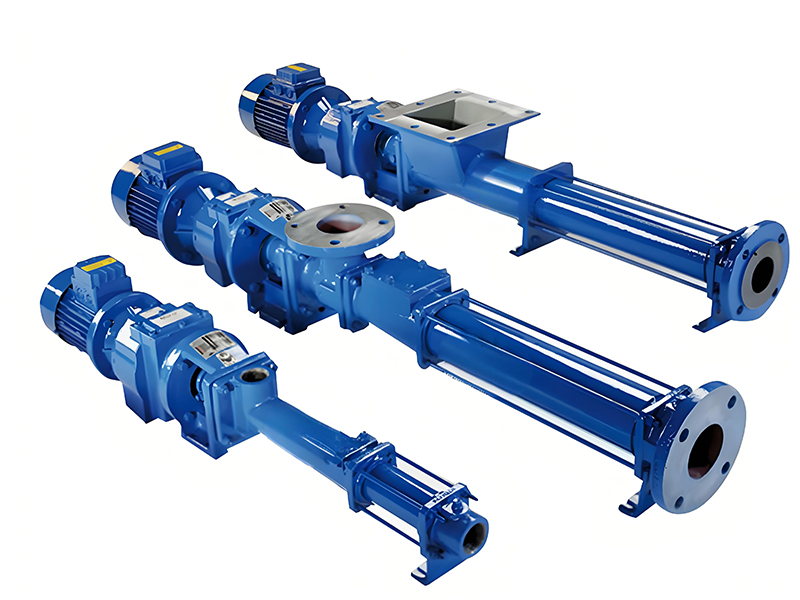
Screw pumps are widely used in chemical plants because they can handle viscous, abrasive, corrosive, and multiphase fluids with relatively stable flow and low pulsation. Understanding the flow characteristics of screw pumps in chemical processing is essential for process engineers, maintenance teams, and plant designers who aim to improve efficiency, reliability, and safety.
A screw pump is a positive displacement pump that uses one or more intermeshing screws to move fluid along the screw axis. In chemical plants, screw pumps are applied in transfer, circulation, loading, unloading, dosing, and multiphase service where conventional centrifugal pumps may struggle with high viscosity, entrained gas, or sensitive media.
Because screw pumps generate flow through a sealing line formed between the screw threads and the pump casing, the flow characteristics are fundamentally different from dynamic machines. Flow is mainly a function of screw geometry and rotational speed, which leads to nearly linear capacity control, predictable performance, and a robust response to changing process conditions.
From an SEO perspective, common search terms associated with this topic include “screw pump flow characteristics”, “positive displacement screw pump in chemical plants”, “twin screw pump for viscous chemicals”, and “multiphase screw pump performance”. The following sections explore definitions, operating principles, flow behavior, advantages, and selection criteria, all tailored to chemical plant environments.
A screw pump is a rotary positive displacement pump where fluid is trapped in cavities formed by screw threads and transported axially from the suction side to the discharge side as the screws rotate. The volumetric displacement per revolution is determined by:
In chemical plants, screw pumps are favored for steady, pulsation-free flow, high suction capability, and tolerance to a wide range of viscosities and phases.
Several screw pump configurations are used in chemical processing. Each type exhibits distinct flow characteristics and is optimized for specific applications.
Single screw pumps, often referred to as progressing cavity pumps, consist of a single helical rotor rotating inside a double-helix stator. In chemical applications, they are used for shear-sensitive, solid-laden, or highly viscous fluids such as slurries, polymers, and sludge.
Twin screw pumps use two intermeshing screws that rotate in opposite directions. They are common in chemical and petrochemical plants for:
Triple screw pumps use one driving screw and two idler screws to create enclosed cavities. They are typically used in chemical plants for clean, lubricating liquids such as heat transfer oils, hydraulic oils, and certain low-viscosity chemical intermediates.
Multiphase screw pumps are specialized twin or multi-screw designs engineered to transport mixtures of gas and liquid over a wide range of gas volume fractions. In chemical and energy complexes, they support applications such as gas–liquid mixtures, vent streams, and off-gas handling in process units.
| Screw Pump Type | Typical Chemical Applications | Flow Characteristics | Viscosity Range | Solids Handling |
|---|---|---|---|---|
| Single Screw (Progressing Cavity) | Slurries, pastes, polymers, latex, sludge, shear-sensitive chemicals | Very low pulsation, nearly linear flow vs. speed, high pressure capability | Wide (from low to extremely high viscosity) | Excellent, can handle high solids content and fibrous materials |
| Twin Screw | Transfer of solvents, acids, bases, bitumen, resins; loading/unloading; multipurpose transfer | Stable flow with low pulsation, good at high speed and varying viscosity | Medium to very high viscosity; tolerates viscosity changes | Good, limited by clearance and material selection |
| Triple Screw | Clean, lubricating chemicals, hydraulic fluids, heat transfer oil, fuel oils | Very smooth flow, high efficiency for low to medium viscosity clean liquids | Low to medium viscosity, lubricating fluids preferred | Poor; requires relatively clean liquid, minimal solids |
| Multiphase Screw | Gas–liquid mixtures, vent streams, off-gas with condensate, multiphase transfer | Capable of handling wide gas volume fraction with stable discharge | Low to high, depending on design | Moderate; used mostly for clean or mildly contaminated streams |
The core mechanism of a screw pump in a chemical plant can be summarized in the following steps:
Flow is produced by positive displacement rather than kinetic energy. That is why the flow characteristics of screw pumps differ from those of centrifugal pumps commonly used in chemical plants.
For an ideal screw pump, the theoretical flow rate \( Q_{th} \) is given by:
Q_th = V_d × n
where:
In practice, leakage losses due to internal clearances and slip reduce the actual flow rate, especially at high differential pressure or low viscosity. The actual flow rate \( Q_{act} \) can be approximated as:
Q_act = Q_th ? Q_leak
Within typical chemical plant operating ranges, and for properly selected screw pumps, the relationship between flow rate and speed remains nearly linear, especially at constant discharge pressure. This predictable behavior simplifies process control, especially where variable-speed drives are used.
Differential pressure across the pump influences leakage and thus effective flow:
For chemical service, differential pressure limitations must consider fluid viscosity, temperature, compatibility, and the required safety margin to prevent thermal degradation or polymerization.
One of the most important flow characteristics of screw pumps is their low pulsation. Because multiple cavities are engaged simultaneously, discharge flow is nearly continuous. This low pulsation is beneficial in chemical plants for:
Many process fluids in chemical plants exhibit medium to very high viscosity, non-Newtonian behavior, or strong temperature dependence. Screw pumps maintain relatively stable flow across a wide viscosity range:
Screw pumps typically exhibit good suction performance due to their positive displacement nature. This is critical in chemical plants where low NPSH available (NPSHa) and high vapor pressure fluids can cause cavitation issues with centrifugal pumps.
Key suction-related characteristics include:
In many chemical processes, pumps must handle mixtures of gas and liquid, such as reactor off-gases with condensate, vacuum system condensates, or multiphase effluents. Screw pumps, especially multiphase and twin screw types, can transport such mixtures with relatively stable flow and minimal loss of capacity up to specified gas volume fractions.
The shear rate inside a screw pump is generally lower than in high-speed centrifugal or gear pumps. This is important in applications involving:
Controlled shear supports stable flow characteristics and helps maintain product quality and yield.
While exact performance curves depend on design and size, screw pump curves in chemical plants share common features:
The following table summarizes typical specification ranges for screw pumps used in chemical processing. Actual values depend on manufacturer, design, materials, and the specific chemical service.
| Parameter | Typical Range | Comments for Chemical Plants |
|---|---|---|
| Flow Rate (Capacity) | 0.1 to 1,500 m3/h | Smaller units for dosing and metering; larger units for bulk transfer and loading |
| Differential Pressure | Up to 80 bar or higher (design-dependent) | High pressures available for high-viscosity or long-distance transfer lines |
| Operating Temperature | -40 °C to +350 °C (with appropriate materials) | Used for refrigerated chemicals, ambient service, and hot heat-transfer media |
| Viscosity Range | 1 to > 1,000,000 cSt | Particularly advantageous for viscous and non-Newtonian chemical fluids |
| Speed | 200 to 3,600 rpm | Lower speeds for abrasive or high-viscosity fluids, higher speeds for clean, thin liquids |
| Gas Volume Fraction (Multiphase) | 0 to 95 % (depending on design) | Relevant in multiphase chemical reactors and process gas streams |
| Materials of Construction | Carbon steel, stainless steels, duplex steels, specialty alloys | Selected for corrosion resistance against acids, bases, solvents, and oxidizing agents |
| Seal Types | Mechanical seals, magnetic couplings, packed glands | Chosen according to fluid toxicity, volatility, and environmental regulations |
| Feature | Twin Screw Pump | Triple Screw Pump |
|---|---|---|
| Best Suited Fluids | Viscous, shear-sensitive, and multiphase fluids | Clean, lubricating chemicals and oils |
| Viscosity Flexibility | Very high; maintains stable flow over wide viscosity changes | Moderate; performance declines with very high viscosity |
| Typical Flow Range | Medium to very high | Low to medium |
| Pulsation Level | Very low | Extremely low |
| Gas Handling | Good, suitable for certain multiphase services | Limited, typically for liquids only |
| Common Chemical Plant Uses | Tank farm transfer, loading/unloading, high-viscosity products | Lubrication systems, heat transfer oil circulation |
Screw pumps deliver a stable, predictable flow that responds directly to speed control. Using variable-frequency drives (VFDs), chemical plants can fine-tune flow rate to match process demand. This is valuable in applications such as:
Because screw pumps can handle a wide range of viscosities, densities, and multiphase mixtures, a single screw pump design can often replace multiple specialized pumps in a chemical plant. This reduces spare parts inventory, training requirements, and complexity.
Within the recommended operating envelope, screw pumps demonstrate high volumetric and mechanical efficiency. High efficiency translates to lower energy consumption, reduced operating costs, and decreased heat generation in temperature-sensitive chemical processes.
Lower NPSH requirements and robust suction performance make screw pumps less prone to cavitation-related damage. This is significant in plants that handle volatile or boiling liquids, where maintaining sufficient NPSH is challenging.
Screw pumps can be installed in horizontal or vertical orientations, depending on space constraints and process requirements. Their compact design simplifies integration into existing chemical plant pipe racks, pump bays, and modular skids.
Flow characteristics strongly depend on matching the correct screw pump type to the chemical fluid and process conditions. Key factors include:
| Chemical Service Characteristic | Recommended Screw Pump Focus | Flow Characteristics Consideration |
|---|---|---|
| High-viscosity polymers or resins | Twin screw or single screw | Ensure sufficient torque, maintain low shear, verify flow at max viscosity |
| Clean, lubricating heat transfer fluids | Triple screw | Optimized for stable, efficient circulation at moderate viscosity |
| Slurries with solids | Single screw (progressing cavity) | Confirm flow stability and allowable solids size and concentration |
| Multiphase gas–liquid mixtures | Multiphase or twin screw | Check gas volume fraction capability and its impact on flow rate |
| Corrosive acids and bases | Material-optimized twin or triple screw | Select materials to prevent corrosion-related loss of clearances and flow |
In many chemical plants, viscosity changes significantly with temperature. When specifying a screw pump, engineers must consider:
Although screw pumps are tolerant of low NPSHa, careful suction line design is still essential:
Flow regulation in screw pumps is typically achieved by varying rotational speed using:
Because flow is nearly proportional to speed, control systems can achieve precise, stable flow setpoints. This is especially useful for dosing chemicals, maintaining reactor feed rates, and balancing flows in multi-stage process trains.
Proper alignment between motor and pump, as well as careful piping layout, are crucial for maintaining expected flow characteristics:
To protect flow stability and pump integrity in chemical service:
Continuous or periodic monitoring helps detect deviations in flow characteristics:
In aggressive chemical environments, corrosion or erosion can increase internal clearances and therefore leakage. Symptoms include:
Mitigation strategies:
Although less susceptible than centrifugal pumps, screw pumps can still experience cavitation or gas locking in extreme conditions. Indicators include:
Preventive measures:
At low viscosity, especially combined with high differential pressure, internal leakage may increase sufficiently to impact flow:
To mitigate:
Optimizing flow characteristics requires considering the full system, not just the pump. Important system-level practices include:
Modern chemical plants integrate screw pumps with distributed control systems (DCS) or programmable logic controllers (PLC). Flow characteristics can be optimized by:
Maintenance strategies for screw pumps in chemical service often emphasize maintaining clearances, seals, and bearings to preserve flow characteristics:
Screw pumps play a critical role in chemical plants by providing stable, controllable flow for a wide variety of challenging fluids. Understanding the flow characteristics of screw pumps enables engineers and operators to:
Key characteristics discussed include the relationship between flow and speed, the influence of differential pressure and viscosity, the ability to handle multiphase mixtures, and the unique advantages screw pumps offer over other pump technologies in chemical processing environments.
By focusing on flow behavior, performance curves, and system integration, chemical plants can fully exploit the benefits of screw pumps, ensuring safe, efficient, and reliable operation across diverse process units.
```

Copyright ? Jiangsu Longjie Pump Manufacturing Co., Ltd.



 Phone
Phone
Comment
(0)